

More than 70% of online shoppers now expect faster, more personalized product discovery, yet many businesses still rely only on traditional search visibility to reach them.
As AI-powered shopping experiences continue to grow, this gap is becoming more noticeable for brands trying to improve product discoverability online.
Today, shoppers are increasingly asking AI assistants direct buying questions instead of manually browsing through multiple websites and product pages. This changes how products are found and recommended. Your products are no longer competing only for search rankings. They also need to be understood clearly by AI systems that match products with shopper intent, trust signals, and relevant product information.
Platforms like ChatGPT, Google Gemini, Microsoft Copilot, and Perplexity AI are making product discovery more conversational and intent-driven, which means traditional SEO alone may not be enough anymore.
In this blog, you will learn how AI shopping recommendations work, what influences product visibility, and what practical steps can help improve your chances of getting recommended more often. Let’s start by understanding why AI shopping search is changing the way people discover and compare products online.
What It Means to Get Products Recommended by ChatGPT and Other AI Assistants
When someone asks an AI assistant questions like “Which office chair is best for back support?” or “What is the best water bottle for travel and gym use?”, the system does much more than search for matching keywords. It tries to understand the shopper’s intent, compare available options, and recommend products that appear useful, relevant, and trustworthy.
This is changing how AI product recommendations work for online businesses. In traditional SEO, visibility often depends on keywords, backlinks, and search rankings. But in AI-powered shopping experiences, your product also needs to be easy for AI systems to understand clearly.
To improve product discoverability online, your product pages should explain:
- What the product does
- Who the product is designed for
- What problem does it solve
- Why does it stand out from similar options
Clear product descriptions, complete information, customer trust signals, and organized product data all play an important role in improving visibility in AI shopping search and increasing the chances of your products being recommended more often.
Why This Matters More Now
AI-powered shopping experiences are growing quickly, and product discovery is no longer limited to traditional search engines alone. Today, platforms like ChatGPT can display products with images, pricing, descriptions, and other important details to help shoppers compare options more easily.
This means AI product visibility is already influencing how people research products and make buying decisions. Businesses that provide clear, updated, and structured product information have a better chance of appearing in AI shopping recommendations.
It is also becoming important to make your website accessible for AI search systems. For example, allowing tools like OAI-SearchBot through your robots.txt settings can help improve visibility in AI-assisted search experiences.
If your product content is unclear, incomplete, or difficult for AI systems to understand, your products may not appear when shoppers ask buying-related questions. Improving product data clarity now can help strengthen long-term product discoverability online.
How AI Assistants Decide What to Recommend
To improve product discoverability online, it is important to understand how AI assistants choose which products to recommend. Platforms like ChatGPT, Google Gemini, and Microsoft Copilot do more than match keywords. They try to understand what the shopper is actually looking for and which products best fit that need.
They Understand Shopper Intent
AI systems analyze the full context behind a question. A shopper may mention budget, product size, comfort, durability, material, or a specific problem they want to solve. Instead of showing random products from a category, AI shopping recommendations focus on products that closely match those needs.
They Depend on Clear Product Information
If your product pages are incomplete, unclear, or difficult to read, AI systems may struggle to understand them confidently. Clear product titles, accurate descriptions, updated pricing, and organized product data help improve AI product visibility and increase the chances of being recommended.
They Look for Trust and Consistency
AI assistants prefer products that appear reliable and well-maintained. Consistent pricing, proper categories, accurate stock information, customer reviews, and trustworthy merchant details all help strengthen confidence in your products.
They Need Context to Explain Recommendations
AI-powered shopping tools often explain why a product is being suggested. If your page clearly explains who the product is for, what problem it solves, and why it stands out, your product becomes easier for AI systems to recommend in a meaningful way.
Key Factors That Improve Your Chances of Being Recommended
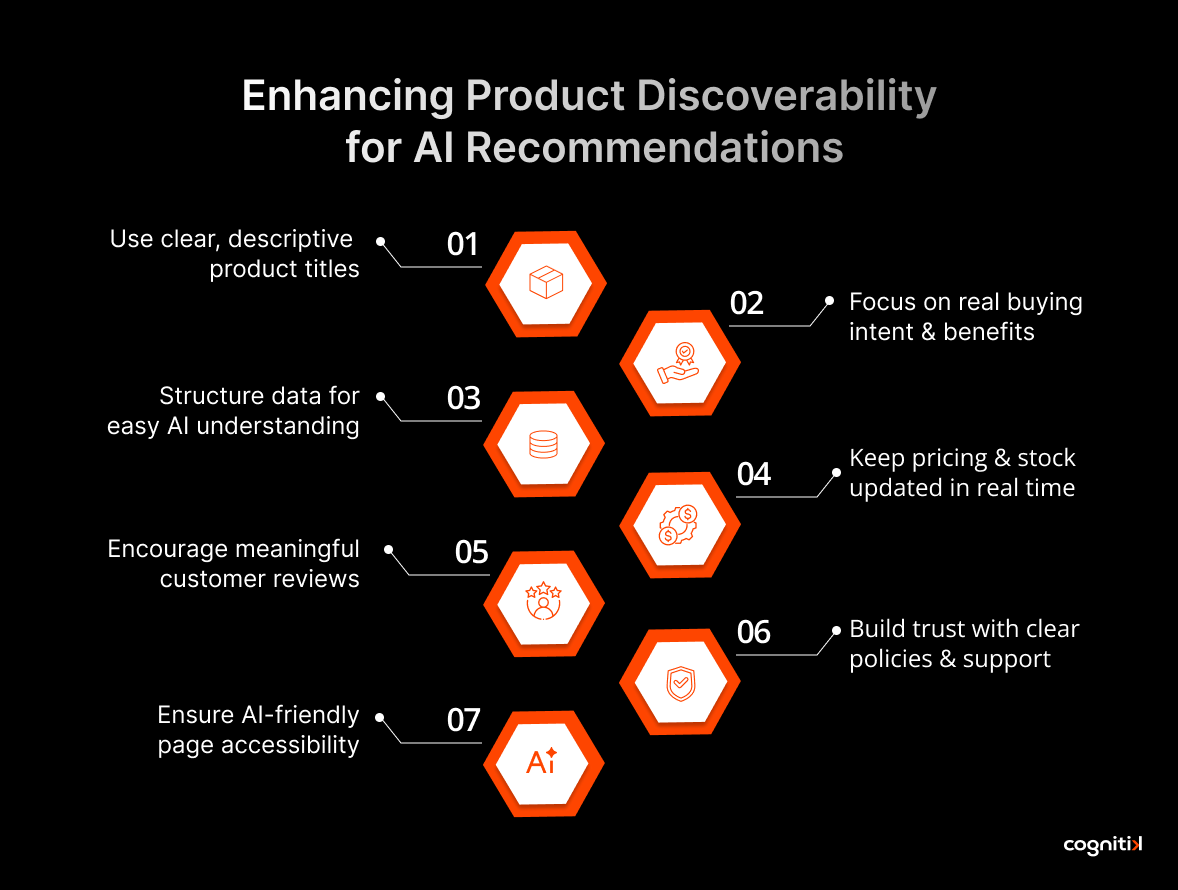
If you want to improve product discoverability online and increase your chances of appearing in AI shopping recommendations across tools like ChatGPT, Google Gemini, and Microsoft Copilot, you need to focus on how clearly and reliably your product data is presented. AI systems do not randomly pick products; they rely on structured signals that help them understand what you are selling and why it is relevant.
- Clear product titles: Your product title should describe exactly what the item is in simple terms. Instead of vague or heavily branded names, use direct titles that clearly state the product type. This helps both users and AI systems quickly understand what your product offers.
- Useful product descriptions: A strong description should explain what the product does, who it is for, and where it can be used. When you focus on real buying intent instead of generic marketing lines, AI shopping search systems can better match your product to user needs.
- Structured product data: Organized product information makes it easier for AI systems to interpret key details like price, availability, variants, and specifications. Platforms like ChatGPT highlight the importance of complete and updated product data for better AI product visibility.
- Accurate pricing and availability: If your pricing is inconsistent or your stock status is outdated, AI systems may avoid recommending your product. Real-time accuracy builds trust and reduces confusion during product comparison.
- Reviews and ratings: Customer feedback plays a major role in AI product recommendations. Detailed reviews that explain real usage experiences help both shoppers and AI systems understand product value more clearly.
- Strong merchant trust signals: Clear shipping policies, return details, support information, and warranty terms all help build confidence. When your store looks complete and reliable, AI systems are more likely to recommend your products.
- Crawlable pages: Your product pages must be accessible to AI systems. If pages are blocked or not properly indexed, visibility drops. Making your site accessible ensures AI tools can read and include your products in search results and recommendations.
If you want to improve how your products appear in AI shopping recommendations and strengthen your overall product discoverability online, you can connect with Cognitik experts. They can help you refine your product data, improve content clarity, and build a stronger AI-ready visibility strategy that increases your chances of being recommended across modern AI search platforms.
Practical Strategies to Improve Product Recommendation Visibility
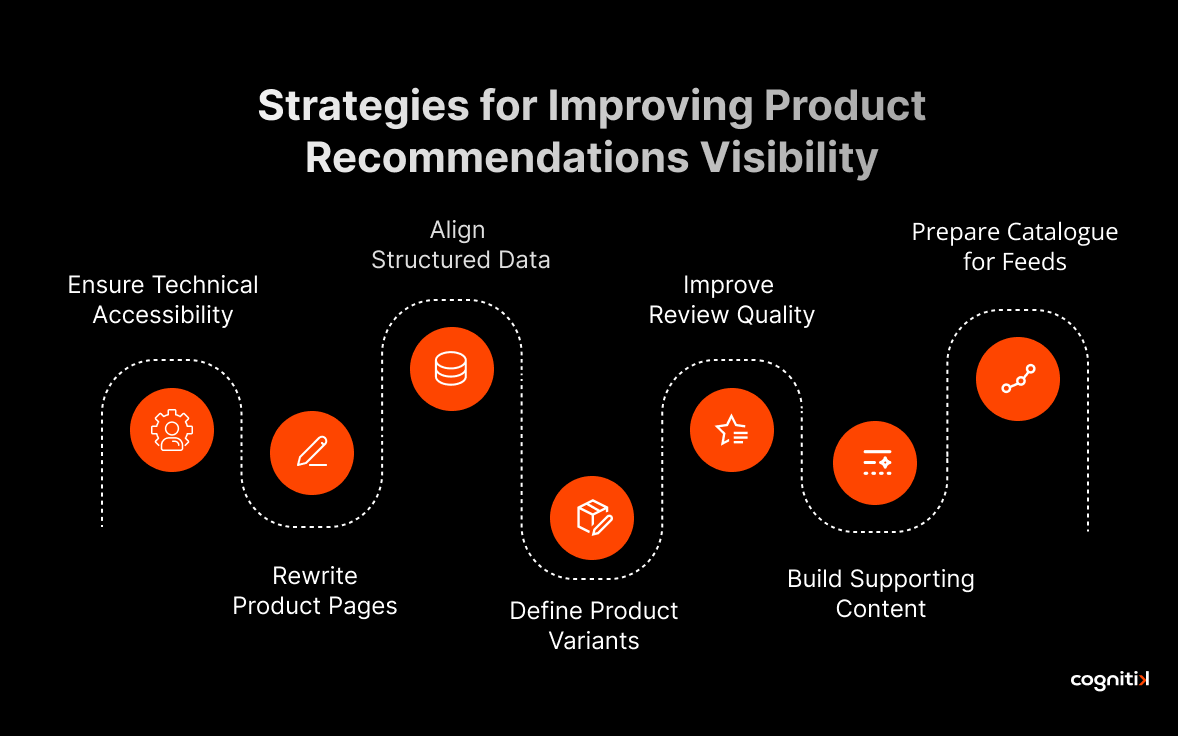
If you want stronger product discoverability online and better chances of appearing in AI shopping recommendations across platforms like ChatGPT, Google Gemini, and Microsoft Copilot, you need more than just live product pages. You need a structured system that helps AI clearly understand, trust, and recommend your products in real buying situations.
1. Ensure technical accessibility and crawlability
Start by checking your site’s technical setup. Your product and category pages should be accessible, properly indexed, and not blocked unintentionally in robots.txt. If AI systems cannot reliably access your content, even the best product optimization will not work effectively.
2. Rewrite product pages in an answer-first format
Instead of writing only marketing-heavy descriptions, structure your product pages to answer real questions clearly. Focus on:
- What the product is
- Who it is for
- What problem does it solve
- Why is it better than alternatives
This makes it easier for AI shopping search systems to understand and recommend your product.
3. Align structured data with visible content
Your product data and page content should always match. Keep product names, pricing, availability, and variants consistent across your website and feeds. Misalignment reduces trust in AI product recommendations.
4. Define product variants clearly
If you offer multiple sizes, colors, or models, make each variation easy to distinguish. AI systems often recommend specific versions, so clarity helps improve product visibility and reduces confusion.
5. Improve review quality and detail
Encourage customers to share meaningful experiences instead of short, generic feedback. Reviews that explain real usage help AI systems understand context and improve recommendation accuracy.
6. Build supporting content around buying intent
Do not rely only on product pages. Create guides, comparisons, and FAQ content based on how people actually search. For example, topics like “best chair for home office” or “mesh vs cushioned chair” help AI systems connect your products to real needs.
7. Prepare your catalog for feed-based discovery
Modern AI shopping systems increasingly rely on structured product feeds. Keeping accurate product IDs, updated pricing, and clean attributes ensures your catalog is ready for future AI-driven discovery.
If you want to implement these improvements in a structured and scalable way, you can get in touch with Cognitik experts who can help you optimize your product data, improve AI visibility, and strengthen long-term product discoverability.
Common Mistakes That Reduce Your Chances of Being Recommended
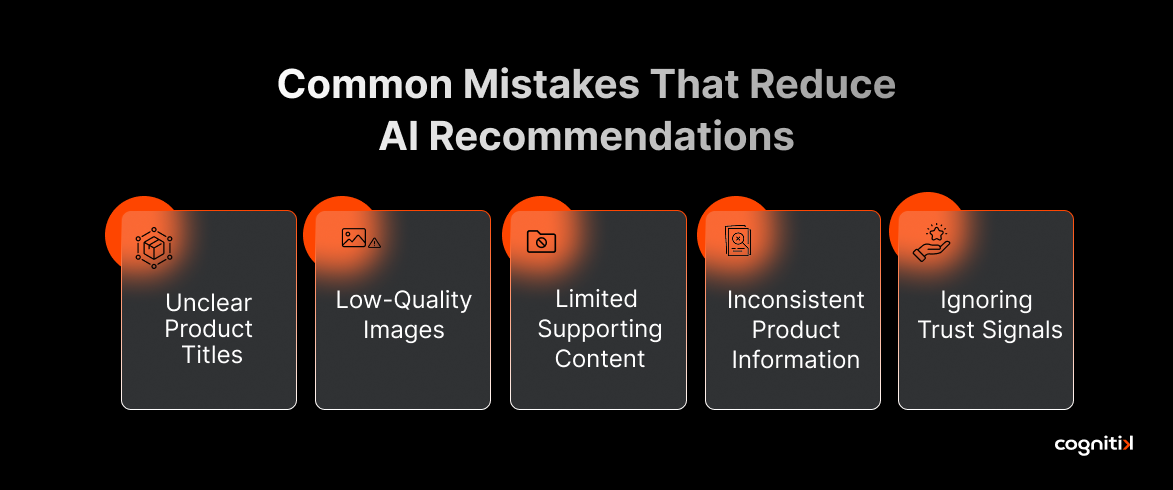
If you are trying to improve product discoverability online through AI shopping recommendations on platforms like ChatGPT, Google Gemini, or Microsoft Copilot, it is just as important to avoid mistakes as it is to follow best practices. Many brands miss visibility not because their products are weak, but because the information around them creates confusion for AI systems.
- One common mistake is using product titles and descriptions that sound creative but do not clearly explain what the product actually is. If AI systems cannot quickly understand it, they are less likely to recommend it.
- Another issue is inconsistent product information across your website, marketplaces, and feeds. When details do not match, AI product visibility drops because the system cannot confidently trust the data.
- Low-quality or unclear images also reduce performance. If a product cannot be visually understood, both users and AI systems may hesitate to engage with it.
- Many businesses also ignore reviews, policies, and support information. These trust signals play a major role in AI product recommendations and help build confidence in your store.
- Finally, focusing only on product pages without supporting content like guides or comparisons limits your reach. Without context, your products miss many AI shopping search opportunities.
To avoid these gaps and improve your AI visibility strategy, you can connect with Cognitik experts who can help you structure your product content and strengthen your chances of getting recommended more often.
How AI Is Shaping the Future of Product Discovery
AI assistants are making product discovery more conversational, where shoppers can simply describe what they need in one sentence and get relevant suggestions instantly. Instead of browsing multiple pages, they now rely on AI shopping recommendations across platforms like ChatGPT, Google Gemini, and Microsoft Copilot to narrow down choices quickly.
This shift means your product visibility now depends on how clearly your data is structured and how easily AI systems can understand your listings. The future of product discoverability online belongs to brands that maintain accurate product details, clear descriptions, and strong trust signals that AI can confidently interpret.
OpenAI’s shopping approach already reflects this change by focusing on richer product data and updated merchant feeds, showing how important structured information is becoming in AI product recommendations.
As AI shopping search continues to grow, businesses that consistently improve their product content, reviews, and supporting information will stay ahead, while those relying only on traditional SEO may fall behind.
Conclusion
Getting your products recommended by AI assistants like ChatGPT, Google Gemini, or Microsoft Copilot is not about chasing shortcuts or trying to game a system. It is about making your products easier to find, easier to understand, and easier to trust.
When you keep your product titles clear, descriptions helpful, data structured, reviews meaningful, and store information consistent, you help AI systems confidently match your products with real buyer intent.
As product discovery continues shifting toward AI-driven experiences, brands that focus on clarity, accurate data, and strong trust signals now will be better positioned for future ecommerce visibility and consistent product recommendations.
If you want to strengthen this foundation and improve how your products are understood and surfaced by AI systems, you can connect with Cognitik experts to build a more structured, AI-ready visibility strategy for long-term growth.
FAQs
1. Can ChatGPT recommend products from ecommerce websites?
Yes. ChatGPT’s shopping experience helps users discover, compare, and explore products in a more guided way. Merchants can improve visibility by providing richer, structured, and updated product data that AI systems can easily understand and surface in relevant searches. For better optimization, Cognitik can help you structure product data and improve AI visibility.
2. Does allowing OAI-SearchBot matter for visibility?
Yes. OpenAI uses OAI-SearchBot to access and surface website content in ChatGPT search results. If your site blocks it, your products may not appear in AI-driven search answers, reducing discoverability. Cognitik can assist in improving the technical setup and ensuring proper AI crawl accessibility.
3. Is traditional SEO still important?
Yes. SEO still supports visibility, but it is no longer enough alone. AI systems also rely on structured data, clarity, and trust signals to recommend products effectively. Cognitik can help you align SEO with AI product discovery needs.
4. Do reviews help products get recommended?
Yes. Reviews add trust and real-world context about product performance, helping AI systems better understand product relevance and user satisfaction. Cognitik can help you build review strategies that improve credibility and AI recommendation chances.
5. What is the first thing brands should improve?
Start with crawlability and clarity. Ensure your site is accessible, product pages are easy to understand, and all details like pricing and availability are accurate. Cognitik can help audit and optimize your product pages for stronger AI visibility.