

Many e-commerce brands today face a familiar problem: customers browse, add items to their carts, and leave without completing the purchase. It’s rarely a lack of interest. More often, the shopping experience doesn’t feel personal or intuitive enough to keep them engaged. People now expect e-commerce mobile apps to understand their tastes, predict what they may need, and make every step feel effortless. This is where e-commerce mobile app development with personalization becomes a real advantage.
A personalized app builds comfort, trust, and relevance in moments that matter. By offering tailored recommendations, relevant products, and smoother journeys, it helps businesses boost conversions and strengthen customer loyalty.
In this blog, you’ll explore the real challenges online stores face, how personalization boosts conversions, and how smart, user-focused mobile apps turn casual shoppers into loyal customers.
Common Problem E-Commerce Businesses Face
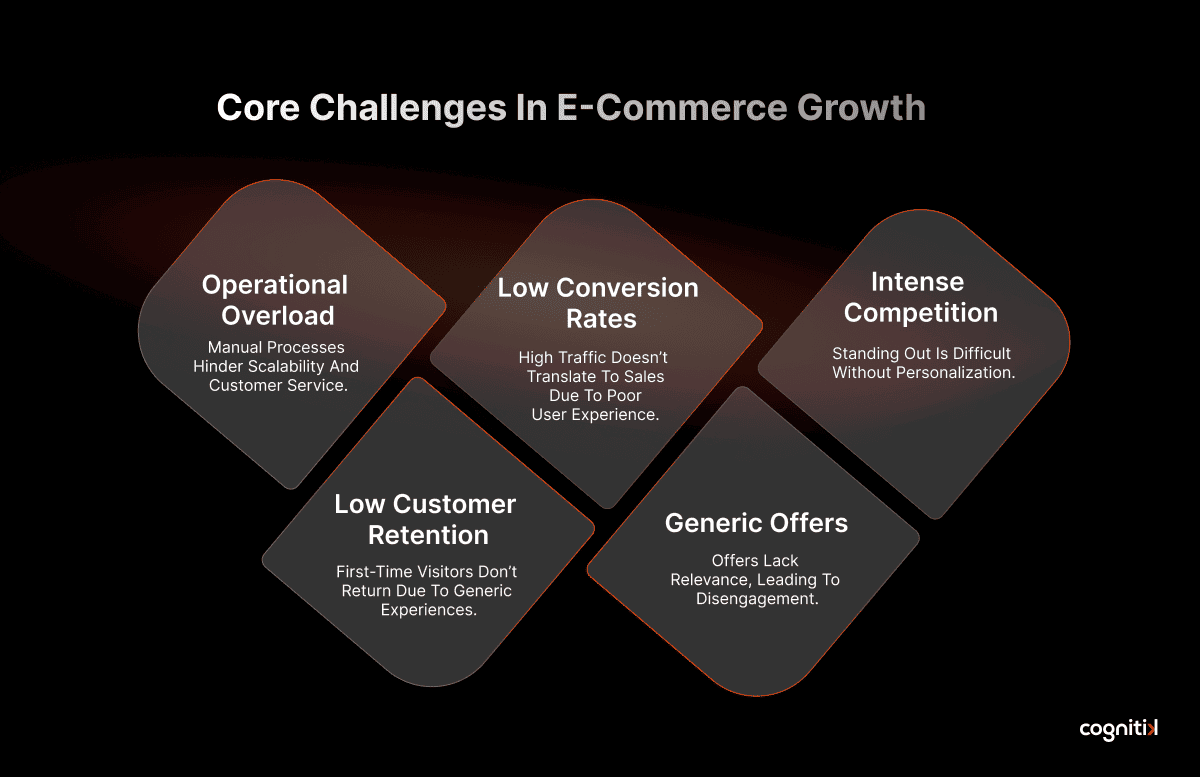
Many online stores put in the effort, invest in marketing, and offer good products, yet growth still moves more slowly than expected. On the surface, these issues seem unrelated, but together they point to one core challenge: customers are not getting an experience that feels personal, intuitive, or guided. This is where the gap between a website and a personalized e-commerce mobile app becomes clear.
Here are the most common problems we see:
1. Customers visit but rarely return
First-time traffic looks strong, but repeat purchases remain low. Most shoppers leave because the experience feels generic. For example, a customer who loves skincare keeps seeing shoe recommendations, which disconnects them instantly.
2. Website traffic is high, but conversions stay low
People browse, add items to the cart, and drop off before buying. They often struggle to find products quickly or do not feel confident enough to make a decision. A slow, cluttered journey leads to lost sales.
3. Offers feel generic instead of relevant
Sending every customer the same discount offers may seem efficient, but it rarely works. Today’s shoppers expect offers based on behavior, interests, and past purchases. Without that, they stop engaging.
4. Standing out becomes harder as competition grows
In a crowded e-commerce market, customers naturally move toward brands that understand them better. Personalization becomes the deciding factor.
5. Scaling daily operations becomes overwhelming
Manual support, product recommendations, and order updates take time. Without automation, teams get stretched, and customers wait longer for responses.
All these challenges point toward a single pattern: The customer journey feels disconnected.
A personalized e-commerce mobile app connects the missing pieces, creating a smoother and more intuitive journey that responds to each user’s needs.
Why a Mobile App Is the Key to Personalized E-Commerce
A website can support your store, but it cannot always deliver the level of personalization customers expect today. This is where mobile app development becomes a game-changer for e-commerce. A mobile app gives your audience a space built entirely around their shopping habits, preferences, and behavior. It removes unnecessary steps and brings everything they care about right to the front.
Customers get instant access with a single tap, which reduces friction and increases retention. The app learns from their browsing patterns, saved items, and past orders to show products that feel personally selected for them. This kind of tailored experience is difficult to achieve through a website alone.
Push notifications also help businesses stay connected with timely updates, personalized offers, and restock alerts without relying on emails or social platforms. With deeper personalization and a smoother journey, e-commerce mobile app development naturally leads to higher conversions and more loyal customers.
If you want to understand how personalization can truly support your e-commerce growth, Cognitik can walk you through the possibilities and help you shape the right mobile app strategy for your business.
How Mobile App Features Drive Personalized Shopping Experiences
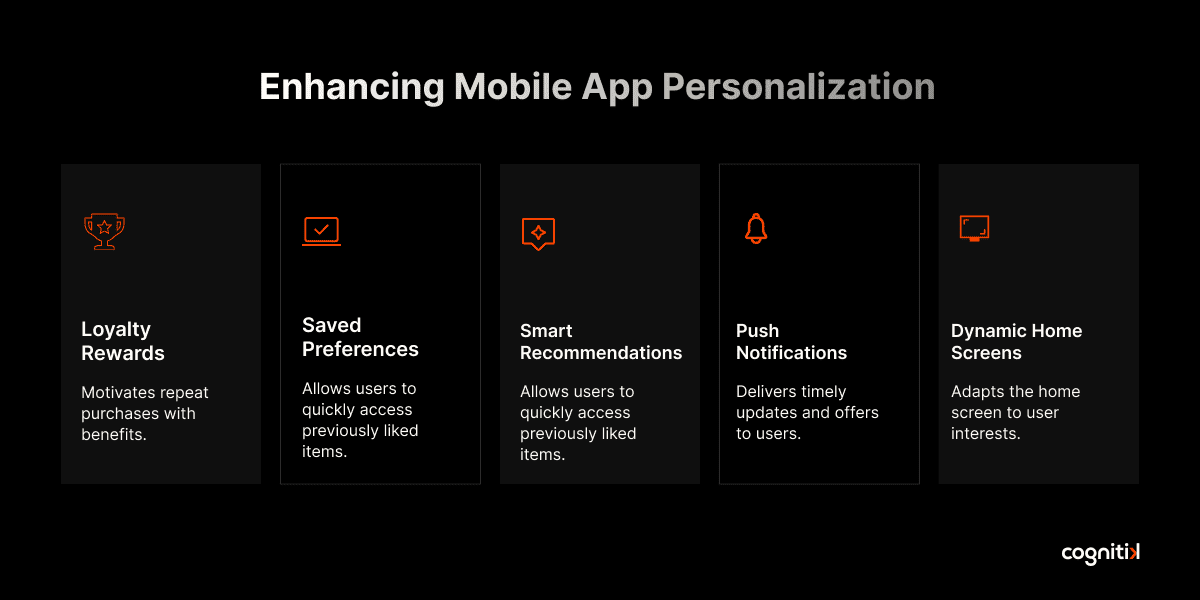
Personalization only works when the features in your mobile app make shopping easier, faster, and more intuitive. E-commerce mobile app development allows businesses to integrate tools that directly impact conversions and customer loyalty.
1. Quick Access Through Saved Preferences and Wishlists
Saved preferences and wishlists let customers return to items they loved without searching again. For example, a user interested in home decor can quickly access previously liked products, reducing browsing time and encouraging repeat purchases.
2. Smart Recommendations Based on Browsing History
Apps can suggest products based on a user’s past behavior, style preferences, and budget. A shopper interested in fitness gear might see complementary items like water bottles, workout mats, or apparel. These recommendations create a curated, relevant experience that feels personal rather than generic.
3. Timely Personalized Push Notifications
Push notifications deliver updates such as restock alerts, limited-time offers, or price drops exactly when users are most active. Reaching customers at the right moment boosts engagement and conversions without overwhelming them.
4. Dynamic Home Screens Tailored to Users
Each user sees a home screen adapted to their interests, showing categories, banners, and featured products relevant to their preferences. This makes the app feel custom-built for each shopper and increases exploration.
5. Loyalty Rewards and In-App Support for Retention
A built-in rewards program motivates customers to return and earn benefits with every purchase. Coupled with instant in-app support for questions or issues, it reduces cart abandonment, builds trust, and strengthens long-term relationships.
How We Helped a Lifestyle E-Commerce Business Drive Repeat Purchases
One of the e-commerce businesses we worked with was in the lifestyle and essentials niche. They had a growing customer base and a stable website, yet they struggled with repeat purchases and low retention. Customers visited but did not engage deeply. The brand offered quality products but lacked the personalized touch that encourages people to return regularly.
They wanted an experience that felt personal, fast, and supportive. Most importantly, they wanted to understand their customers better so they could recommend relevant products and foster loyalty.
What We Did
We started by understanding how customers behaved on their website. Most users browsed the same types of products repeatedly, yet there was no system to highlight these items or guide them toward matching options. We noticed that customers were dropping off because they had to repeat the same steps each time.
Based on this, we designed a personalized mobile shopping experience that included:
- A dynamic home screen that changed based on interests
- Recommendations powered by browsing and purchase behavior
- Saved preferences for quick access
- A simplified three-step checkout
- Smart reminders for items left in carts
- Personalized notifications for restocks, price drops, and new collections
While building the app, we also merged automation into the workflow. Order tracking, returns, customer queries, and promotional updates were all handled through the app to save the internal team’s time.
The Final Outcome
Within weeks of launching the personalized e-commerce mobile app, the business saw a noticeable shift. Customers began returning more frequently because they felt understood. They no longer had to search repeatedly for items they liked. Suggestions felt relevant. The checkout process felt effortless. Notifications helped them stay updated without feeling overwhelmed.
Sales increased as customers started making quicker decisions. The team experienced less manual pressure because most routine tasks were automated. The entire customer journey became unified, consistent, and impactful.
This transformation became a clear example of how the right personalization strategy, combined with thoughtful mobile app development, can reshape an e-commerce business from the inside out.
If you want to explore how Cognitik can create a personalized e-commerce mobile app for your business, we would be happy to help you understand the steps, timelines, and possibilities.
Where Most Brands Struggle With Personalization (and How to Fix It)
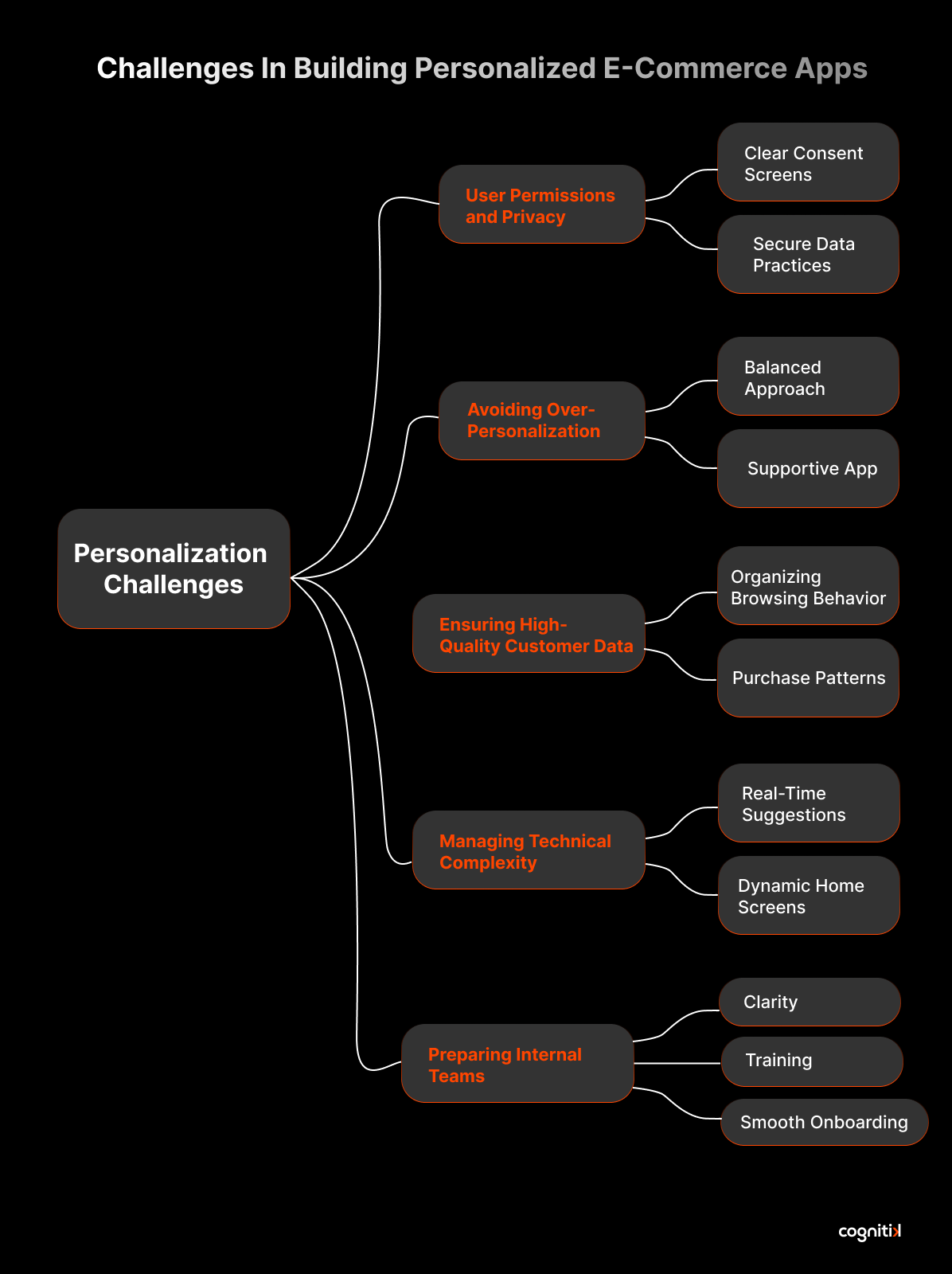
Personalization opens new opportunities for e-commerce growth, but it also requires thoughtful planning to work smoothly. Many businesses face similar roadblocks during mobile app development, especially when building personalized shopping experiences.
- Handling user permissions and privacy: Customers want tailored journeys, but they also expect transparency. Clear consent screens and secure data practices build trust from the first interaction.
- Avoiding over-personalization: Too many recommendations or notifications can feel intrusive. A balanced approach ensures the app supports customers rather than overwhelming them.
- Ensuring high-quality customer data: Accurate suggestions depend on clean, reliable data. For example, organizing browsing behavior and purchase patterns helps the app deliver meaningful product recommendations.
- Managing technical complexity: Features like real-time suggestions and dynamic home screens require a solid mobile app architecture and scalable backend systems.
- Preparing internal teams: A personalized e-commerce mobile app changes workflows, so teams need clarity, training, and smooth onboarding.
With the right strategy and expert guidance, these challenges become manageable and lead to stronger conversions, higher retention, and a more connected customer experience.
How to Know If Your E-Commerce Business Should Invest in a Mobile App
Knowing when to invest in mobile app development can feel confusing, especially when your website is already running well. But certain signs show that your e-commerce business is ready for a more personalized and mobile-first experience. Here are the clearest indicators that many growing brands notice:
- You want customers to return more often because first-time visitors leave without building a long-term connection. Personalization inside an e-commerce mobile app can help shoppers feel understood and supported.
- Your audience spends more time browsing on mobile, which means an app can deliver a smoother, faster, and more engaging journey.
- Your internal processes depend heavily on manual work, making order updates, follow-ups, and support harder to manage. Automation inside an app reduces effort and errors.
- You want to strengthen your digital presence by having a dedicated space on your customers’ phones, which increases visibility and brand recall daily.
- You need deeper customer insights because your current data does not reveal enough about preferences, patterns, or behavior.
If even a couple of these points sound familiar, a personalized e-commerce mobile app can accelerate your growth and bring clarity to your customer journey.
Conclusion
The way customers expect to interact with businesses has already changed. Today, personalization is not an added feature. It is the foundation of a smooth, meaningful, and memorable shopping experience.
A personalized e-commerce mobile app helps you guide your customers, support them at the right moments, and build long-lasting trust. With the right development approach, your app can become a direct path to higher retention, stronger conversions, and a more connected customer journey.
If you are ready to explore how a personalized e-commerce mobile app can support your goals, Cognitik is here to help you take the next step with clarity and confidence. We would be glad to walk you through your options and help you understand what your business can achieve.
FAQs
How does an e-commerce mobile app increase sales?
A mobile app boosts sales by offering faster navigation, personalized recommendations, and a smoother checkout experience. Cognitik builds tailored e-commerce apps that guide users toward relevant products, improving conversions and encouraging repeat purchases through meaningful personalization.
Why is personalization important in e-commerce apps?
Personalization helps customers feel understood by showing products based on their preferences and behaviors. Cognitik designs intelligent app features like dynamic home screens and behavior-based suggestions that make every shopping journey relevant, intuitive, and conversion-friendly.
How long does it take to build a personalized e-commerce mobile app?
Most personalized e-commerce apps take 8–16 weeks, depending on features and complexity. Cognitik follows a transparent, step-by-step development process to ensure smooth delivery, continuous testing, and an experience that aligns perfectly with your business goals.
Do small e-commerce businesses really need a mobile app?
Yes, especially if your audience shops on mobile or you want higher retention. Cognitik helps small and mid-sized brands build lightweight, cost-effective apps that improve customer engagement, automate workflows, and create loyal repeat buyers.
What features should an e-commerce mobile app include?
Key features include wishlists, personalized feeds, push notifications, easy checkout, loyalty rewards, and in-app support. Cognitik customizes these features based on your niche and customer behavior to maximize conversions and overall user satisfaction.
How much does e-commerce mobile app development cost?
Costs vary based on design, features, and integrations. Cognitik provides flexible development options and personalized feature planning, ensuring you get a high-performance app that fits your budget and business goals without unnecessary add-ons.
Can a mobile app help reduce manual work?
Yes. Mobile apps automate tasks like order updates, tracking, recommendations, and communication. Cognitik integrates smart automation that reduces workload, prevents errors, and gives your team more time to focus on growth.